Condition Guide · Atlanta, GA
Athletes call it jumper's knee, but you don't have to be an athlete to have it. Patellar tendinopathy is a breakdown of the thick band linking your kneecap to your shinbone — the tendon that takes the strain every time you squat, land, or climb stairs. When it turns chronic, the tendon stops repairing itself the way it should.
Real Results
This account comes from a patient whose patellar tendon degeneration was treated with the percutaneous TenJet procedure.
TenJet Patient Testimonial - Chronic Patellar Tendinitis (Jumper's Knee)
Video courtesy of HydroCision, Inc., the maker of TenJet®. Individual results vary; this patient's experience is not a guarantee of outcome. Talk with a specialist about whether the procedure is appropriate for you.
See The Procedure
Watch HydroCision's own demonstration of the patellar tendon procedure, then see why chronic tendon pain is a degeneration problem — not the simple inflammation the name "tendinitis" suggests.
TenJet Patella Tendinosis Minimally Invasive Tenotomy


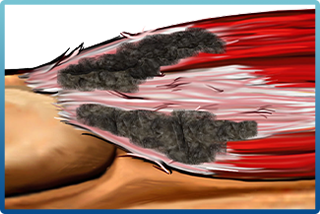
Diagrams and video courtesy of HydroCision, Inc.
Understanding The Condition
Patellar tendinopathy tends to build in stages — sore after activity at first, then sore during it, and eventually sore enough to change how you move. The reason it lingers is structural: the collagen in the tendon has become disorganized and weakened, and that damaged tissue has little blood supply to heal itself.
Where TenJet Fits
Physical therapy and progressive loading resolve many cases and are the usual first step. For the tendon that stays painful anyway, TenJet — made by HydroCision, Inc. — gives a specialist a targeted, in-office option that treats the diseased tissue without an open surgical incision.
Common Questions
It transmits force from the quadriceps to the shin, making it central to jumping, squatting and stair climbing — which is why degeneration there is so limiting.
Repeated loading beyond the tendon's capacity to repair produces accumulated damage. Once collagen is disorganised, ordinary rest does not reliably restore normal structure.
Commonly around two weeks before progressive loading begins, though it depends on lesion size. One published case used a locked hinged brace during that period.
In the documented soccer case, gradual return to recreational play began at twelve weeks following staged rehabilitation and a period of light jogging beforehand.
This information is general and is not medical advice. Whether any procedure is appropriate for you can only be determined by a physician who has examined you and reviewed your imaging.